
You finally did it. The house up north is sold or listed, the moving truck has come and gone, and you are learning which beach walkway has the good parking and which grocery store to avoid on Saturdays. Whether you came down from New Jersey, New York, Connecticut, Pennsylvania, Massachusetts, or Maryland, welcome. A meaningful share of our community made the same trip, including our own family, which moved here from the Jersey Shore.
Here is what most people discover a few months in: moving to Florida changes more than your weather and your wardrobe. It quietly changes your retirement plan. Taxes, residency, healthcare, estate documents, and even the question of who advises you all deserve a fresh look once your address ends in FL.
Here are the areas worth reviewing.
Taxes: no state income tax is a planning opportunity, not a finish line
The tax difference is usually the headline reason people move, and it is real. Florida has no state income tax, which means your IRA withdrawals, pension payments, and Social Security benefits are not taxed at the state level the way they may have been up north.
But here is the part that gets missed: this is not just a savings, it is a planning opportunity. The years after a move can be a natural time to revisit questions like when to draw from which accounts, whether strategies such as Roth conversions deserve a fresh look now that state tax is out of the equation, and how your withdrawal order should work going forward. Federal taxes did not move away when you did, and decisions that made sense under your old state’s rules may deserve reconsideration under Florida’s.
None of that happens automatically.
It happens when someone sits down and re-runs the plan with your new zip code in mind.
Residency and domicile: make the move official
Living in Florida and being a Florida resident in the eyes of your former state are not always the same thing. States with income taxes and estate taxes have been known to look closely at former residents who claim to have left, especially those who still spend part of the year up north or maintain property there.
Establishing Florida domicile typically involves practical steps: things like a Florida driver’s license, voter registration, a declaration of domicile, updating your address across financial accounts, and being mindful of how much time you spend in your former state. Snowbirds moving toward full-time residency should take this especially seriously.
The details vary by state and by household, which is why this is an area where coordination with a qualified tax professional or attorney matters. The point for now is simple: do not assume the move is official just because the furniture arrived.
Healthcare: new state, new landscape
Healthcare is deeply local. Your Medicare coverage travels with you, but the specifics around you change: which doctors are accepting new patients, which hospital systems serve Volusia County, and, for those with Medicare Advantage or drug coverage, how plan networks and options differ in your new county.
A move is also a natural checkpoint to review your coverage with a licensed Medicare specialist, since a change of address can open enrollment windows and choices you might not otherwise have. Building your local healthcare team early, before you need it urgently, is one of the kindest things you can do for your future self.
Estate documents: your old paperwork may not fit your new state
This one surprises people. Wills, powers of attorney, healthcare directives, and trusts drafted up north do not simply expire when you cross the state line, but state laws differ in important ways, from how documents are executed and witnessed to how healthcare decisions and probate are handled. Florida also has distinctive rules in areas like homestead property that can affect how your estate plan actually works.
If your documents were drafted in New Jersey or New York years ago, having them reviewed by a Florida-licensed estate attorney is a sensible step. And while you are at it, review your beneficiary designations on IRAs, 401(k)s, life insurance, and annuities. Beneficiary forms, not your will, generally control who receives those accounts, and outdated forms are one of the most common problems we see with new transplants.
The advisor question: who is actually watching your plan now?
Many transplants keep the advisor they had up north for years after the move. Sometimes that relationship still works well. Often, though, it drifts. The advisor is several states away, the relationship has been handed from one team member to another, and conversations have thinned out to an annual phone call about the portfolio.
The distribution years of retirement, when you are actually living on your savings, tend to involve more coordination than the accumulation years: income sequencing, tax-aware withdrawals, Social Security timing, healthcare transitions, and estate updates. For many households, that is when a local relationship starts to matter more, someone who knows Florida, knows the community, and can sit across the table from you.
This is not a claim that everyone should switch advisors. It is an encouragement to ask the question honestly: is my current arrangement built for the phase of life I am in now, in the state I live in now?
A hypothetical transplant story
Consider Bob and Carol, a hypothetical couple who moved to New Smyrna Beach from Long Island. They sold their house, updated their driver’s licenses, and considered the move done.
Three years later, a few things surfaced. Their wills were still New York documents that had never been reviewed by a Florida attorney. Carol’s IRA still listed her late sister as a contingent beneficiary. No one had ever revisited their withdrawal strategy in light of Florida’s tax picture, and their advisor up north had handed their account to a junior associate they had never met. Nothing catastrophic had happened, but their plan had quietly stopped fitting their life. This example is hypothetical and for educational purposes only, not a depiction of actual clients or outcomes. Individual results will vary.
The fix was not dramatic. It was a season of coordinated housekeeping: a Florida attorney for the documents, updated beneficiaries, and a fresh income and tax review that treated the move as the planning event it always was.
Make Florida part of your plan, not just your address
If you have relocated to the New Smyrna Beach area in the last few years, or you are planning the move now, consider giving your retirement plan the same attention you gave the moving boxes.
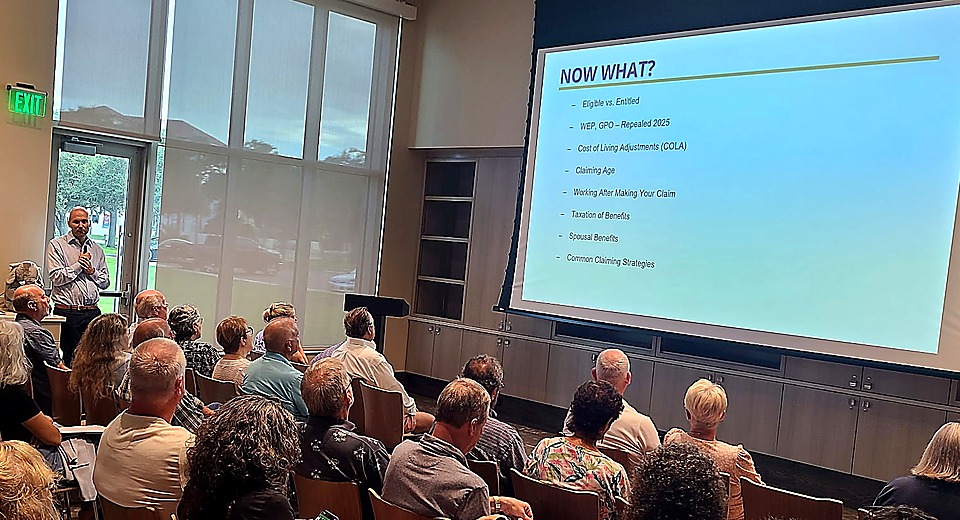
We host monthly educational workshops in New Smyrna Beach and Port Orange on Social Security and taxes in retirement, and transplants are always well represented in the room. See upcoming dates and register at nsbretirement.com/retirement-workshops-new-smyrna-beach-fl.
Or call New Smyrna Beach Retirement Solutions at 386-402-4626 to schedule a conversation about what your move means for your plan.
Disclosure: This article is for general informational and educational purposes only. Investment advisory services are offered by Signal Advisors Wealth, LLC (“Signal Wealth”), a Registered Investment Adviser with the U.S. Securities & Exchange Commission. Registration with the SEC does not imply a certain level of skill or training. Insurance products and services are offered through New Smyrna Beach Retirement Solutions. Signal Wealth does not offer insurance products. New Smyrna Beach Retirement Solutions is not affiliated with Signal Wealth. Additionally, when New Smyrna Beach Retirement Solutions and/or its agents are recommending and/or selling insurance products they are not acting on behalf of Signal Wealth or in a fiduciary capacity, and instead are governed by the applicable insurance rules and regulations. For more information about Signal Wealth, or to receive a copy of our Form ADV or Form CRS, please visit www. go.signaladvisors.com/signalwealth. New Smyrna Beach Retirement Solutions is not affiliated with or endorsed by the U.S. Government, the federal Medicare program or any governmental agency. New Smyrna Beach Retirement Solutions and its agents do not provide tax, legal or social security advice. Clients are advised to consult their tax advisor or attorney regarding tax and legal advice and to contact the Social Security Administration at their local office or online at www.ssa.gov. Investing involves risk, including the potential loss of principal. No investment strategy can guarantee a profit or protect against loss. Past performance is not indicative of future results. The information provided herein is for informational purposes only. None of the information contained herein shall constitute an offer to sell or solicit any offer to buy any security, investment advisory or insurance product. Investment advisory services are provided in accordance with a fiduciary duty of care and loyalty that includes putting client interests first and disclosing conflicts. Insurance services have a best interest standard which requires recommendations to be in the client’s best interest. Advisors may receive commissions and other compensation for the sale of insurance and annuity products. Annuity guarantees are backed by the financial strength and claims-paying ability of the issuing insurance company. New Smyrna Beach Retirement Solutions holds a health insurance license but is not a licensed Medicare insurance agent and does not sell, recommend, or enroll clients in Medicare Advantage, Medigap, or Part D plans. Medicare guidance here is educational only.