
If you read anything about retirement finance, you have seen the headlines. Roth conversions are everywhere: in magazines, on financial talk shows, in the seminar invitations stacking up on your kitchen counter. The coverage often makes conversions sound like a move every retiree should be making, immediately and in size.
The truth is more interesting and less dramatic. Roth conversions are a legitimate planning tool that genuinely helps some households and genuinely hurts others. The difference is not luck. It is whether the strategy was evaluated against a specific household’s tax picture, income timeline, healthcare situation, and goals, or simply adopted because a headline said so.
Let’s slow the conversation down and look at how the decision actually works.
What a Roth conversion is, in plain English
Most retirement savings live in pre-tax accounts, like traditional IRAs and 401(k)s. You received a tax break when the money went in, and you owe ordinary income tax when it comes out. A Roth account works in reverse: the money goes in after taxes, and qualified withdrawals come out tax-free.
A Roth conversion is simply moving money from the pre-tax side to the Roth side, on purpose, and paying the income tax on the converted amount now. In exchange, that money and its future growth can potentially come out tax-free later, and Roth IRAs are not subject to lifetime required minimum distributions for the original owner.
In one sentence: a conversion is a decision to pay a known tax bill today in the hope of avoiding a larger or less convenient one tomorrow.
The windows when conversions get evaluated
Certain seasons of life tend to put conversions on the table:
The gap years
For many retirees, there is a stretch between the last paycheck and the start of Social Security or required minimum distributions when taxable income is unusually low. Lower-income years can make conversions comparatively less expensive, which is why this window draws so much planning attention.
Down markets
Some households evaluate conversions when account values are temporarily depressed, since converting a lower balance means a smaller tax bill on the same number of shares, with any recovery happening on the Roth side. Market timing is never certain, but the logic is worth understanding.
Legacy planning
Households who expect to leave retirement accounts to children sometimes evaluate conversions because inherited pre-tax accounts generally must be distributed by heirs within a limited number of years, potentially during their peak earning years. Prepaying tax at the parents’ rates instead of the children’s is a tradeoff some families consider.

The costs: why conversions can backfire
Every converted dollar is taxable income in the year of the conversion, and that single fact drives every way the strategy can go wrong.
- Bracket creep. A conversion sized without care can push income into higher tax brackets, meaning some of the converted money is taxed at rates that undo the point of converting.
- Medicare premium effects. Medicare premiums for higher-income retirees are based on income from prior tax returns. A large conversion can raise Medicare premiums a couple of years later, a cost that surprises people who only did the income-tax math.
- Other ripple effects. Higher reported income can influence the taxation of Social Security benefits and other income-sensitive items in a given year.
- Paying the tax from the wrong pocket. Conversions tend to work better when the tax bill can be paid from money outside the retirement account. Using the converted funds themselves to pay the tax shrinks the very asset the strategy is trying to build.
- Converting money you’ll need soon. Roth conversions come with their own timing rules, and money converted then withdrawn quickly can create complications. Conversions generally suit dollars with a long runway.
Two hypothetical scenarios
Where it may help
Consider Ellen, 66, recently retired, planning to delay Social Security for a few years and living on cash savings in the meantime. Her taxable income during these gap years is modest, and her large pre-tax IRA means sizable required distributions are coming later whether she wants them or not. Evaluated carefully, modest conversions spread across her low-income years, sized to stay within intended tax brackets and paid for with outside cash, might reduce the pressure of those future required distributions.
Where it may backfire
Now consider Al, 73, already taking required minimum distributions and Social Security, with income that sits near a Medicare premium threshold. A large conversion in a single year could stack on top of income that is already substantial, taxing the conversion at higher rates and raising his Medicare premiums two years out. The same tool that fit Ellen’s situation works against Al’s.
Both examples are simplified hypotheticals for educational purposes only, not recommendations. Real decisions require real numbers, and details omitted here can change the answer entirely.
Why multi-year thinking beats one-year thinking
Perhaps the most common conversion mistake is treating it as a single-year, yes-or-no question. In practice, conversion planning is usually a multi-year exercise: mapping expected income across your sixties and seventies, identifying which years offer room in the brackets, and deciding whether to convert gradually, in stages, sized to each year’s picture.
That kind of mapping is exactly what a written retirement income plan is for. It is also why conversion questions should involve your tax professional. A conversion is a tax event, and coordinating with a qualified tax advisor before acting is not a formality. It is part of doing it right.
The bottom line
Roth conversions are neither a miracle nor a trap. They are a tool, and like any tool, the results depend on whether it fits the job. The households that benefit are usually the ones that evaluated the strategy inside a broader plan, over multiple years, with taxes and Medicare effects on the table. The households that regret it are usually the ones that acted on a headline.
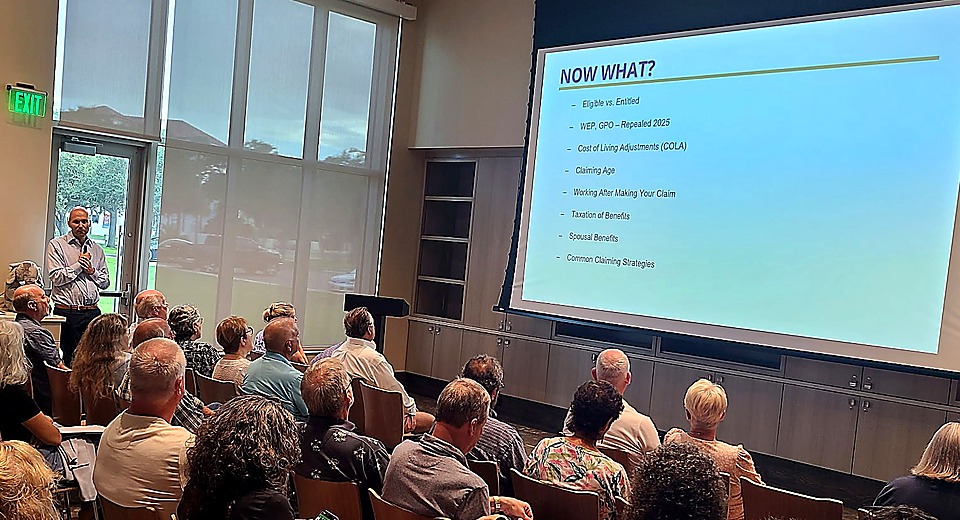
Taxes in retirement, including how strategies like conversions fit into an income plan, are a core topic at our monthly educational workshops in New Smyrna Beach and Port Orange. See upcoming dates and register at nsbretirement.com/retirement-workshops-new-smyrna-beach-fl.
Or call New Smyrna Beach Retirement Solutions at 386-402-4626 to schedule a conversation about whether this strategy deserves a closer look in your situation.
Disclosure: This article is for general informational and educational purposes only. Investment advisory products and services made available through Signal Advisors Wealth, LLC (Signal Wealth), an SEC Registered Investment Adviser. Insurance products are offered through the insurance business New Smyrna Beach Retirement Solutions. New Smyrna Beach Retirement Solutions is also an Investment Advisory practice that offers products and services through Signal Advisors Wealth, LLC (Signal Wealth), an SEC Registered Investment Adviser. Registration with the SEC does not imply a certain level of skill or training. Signal Wealth does not offer insurance products. The insurance products offered by New Smyrna Beach Retirement Solutions are not subject to investment adviser requirements. We are not affiliated with any government agency, and do not provide tax or legal advice. Investing involves risk, including possible loss of principal. No investment strategy can ensure a profit or guarantee against losses. Past performance may not be used to predict future results. Insurance product guarantees are backed by the financial strength and claims-paying ability of the issuing company. Investment advisory services are provided in accordance with a fiduciary duty of care and loyalty that includes putting your interests first and disclosing conflicts. Insurance services have a best interest standard which requires recommendations to be in your best interest. Advisors may receive commission for the sale of insurance and annuity products. Additional details including potential conflicts of interest are available in our firm’s ADV Part 2A and Form CRS (for advisory services visit go.signaladvisors.com/signalwealth) and New Smyrna Beach Retirement Solutions Insurance Agent Disclosure for Annuities form (for annuity recommendations).